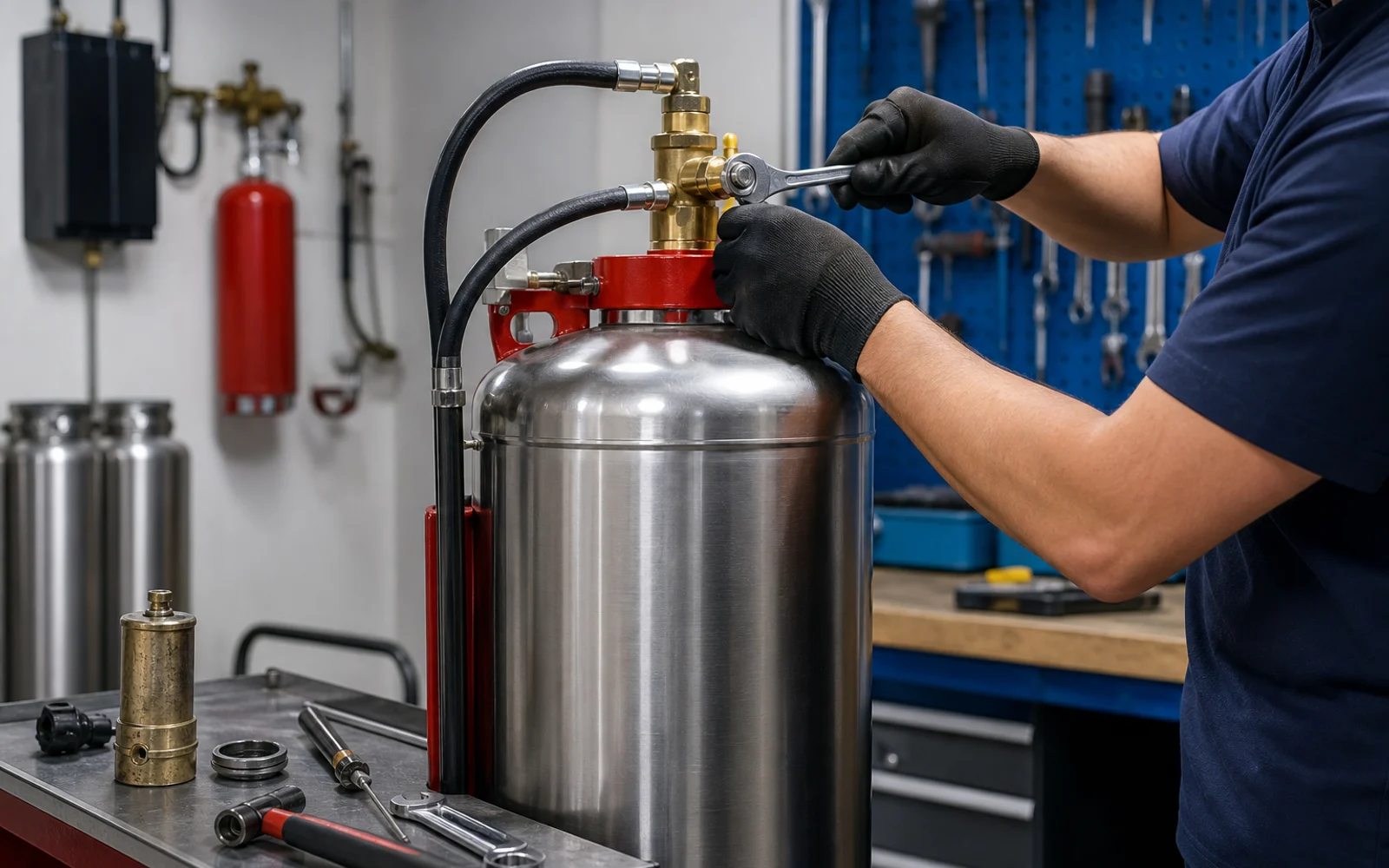
Kitchen Fire Suppression Miami provides new commercial cooking fire suppression installation for restaurants, buildouts, remodels, and conversions in Miami, Florida. Owners and project teams can Call Now to discuss the planned Miami kitchen.
Commercial Kitchen Fire Suppression Installation in Miami, Florida
New installation planning centers on the actual cooking equipment, hood and duct areas, system activation, nozzle placement, piping, and connected shutdowns. Starting before the layout becomes final gives the project team time to coordinate these parts of the commercial kitchen.
A commercial kitchen fire suppression installation must fit the cooking arrangement that will be used when the project opens. Early review can connect the appliance schedule with the hood, duct, plenum, piping, nozzle, detection, manual activation, and shutdown portions of the planned system.
Installation service supports new restaurants, tenant improvements, buildouts, remodels, conversions, and projects with a new cooking arrangement. The review should reflect the equipment that will actually be placed beneath the completed commercial kitchen hood.
System Design for New and Remodeled Miami Commercial Kitchens
Installation planning starts with the intended fryers, ranges, griddles, charbroilers, ovens, and other protected appliances. Their type, dimensions, and positions influence the suppression arrangement. Before equipment locations become final, Call Now for project review.
The cooking lineup provides the foundation for appliance coverage planning. Equipment dimensions and positions help determine how the wet-chemical fire suppression arrangement will relate to each protected appliance in the completed Miami commercial kitchen.
- Review Cooking-Equipment Modifications
Hood dimensions, duct openings, plenum areas, cylinder needs, piping, and nozzle placement must work with the completed commercial cooking layout. Contractors coordinating related trades can Call Now while plans remain adjustable.
The installation plan should follow the intended cooking line rather than an earlier or incomplete equipment list. Changes to appliance type, dimensions, or location can affect how protection is arranged.
Fryers, ranges, griddles, charbroilers, ovens, and other protected appliances each occupy a defined position in the planned kitchen. Reviewing that arrangement before final placement helps keep suppression planning connected to the project design.
Hood and duct details are part of the same installation picture. Their dimensions and openings must be considered with the plenum areas, cooking appliances, piping, and nozzle placement.
Cylinder needs and piping are planned around the completed commercial cooking arrangement. These elements should be coordinated with the project rather than treated separately from the protected appliances and hood areas.
Nozzle selection and placement follow the appliances and areas the system is intended to protect. A changed equipment schedule can therefore require a fresh review of the earlier suppression arrangement.
Automatic detection and a manual pull station give the system separate activation paths. Their locations and connection to the planned installation should be considered while the restaurant or facility kitchen is being developed.
Automatic detection and the manual pull station provide separate activation paths for the system. To discuss how those features fit the proposed Miami restaurant or facility kitchen, Call Now.
Gas shutdowns, electrical shutdowns, and ventilation-related functions connect suppression activation with designated cooking and exhaust equipment. For coordination questions before final connections are completed, Call Now.
Request Installation ReviewProject coordination continues as cooking equipment and related connections are finalized. Reviewing substitutions and other late changes can keep the current kitchen arrangement aligned with the suppression plan.
Coordinating Shutdowns and Late Project Changes in Miami
A late appliance substitution can affect nozzle selection, placement, piping, appliance coverage, and connected utilities. If the equipment schedule changes during construction, Call Now before relying on the earlier suppression plan.
Gas Shutdowns
Gas shutdown service connects suppression activation with designated gas cooking equipment. The planned connection should correspond to the equipment and utility arrangement selected for the completed commercial kitchen.
Electrical Shutdowns
Electrical shutdown functions connect the fire suppression system with designated electrical cooking equipment. Coordination should reflect the final appliance schedule and the connections planned by the related project trades.
Ventilation-Related Functions
Ventilation-related functions connect system activation with designated exhaust equipment. These functions are coordinated as part of the broader installation rather than separately from the hood and commercial cooking layout.
Equipment Schedule Changes
A changed equipment schedule can alter appliance coverage, nozzle selection, placement, piping, and shutdown connections. Project teams should request another layout review when the current cooking lineup differs from the earlier design.
Late changes are easier to address while project plans and related trade work remain adjustable. The review should use the current appliance types, dimensions, locations, and utility connections.
Testing and service records support the transition from installation to an operating commercial kitchen. For a Miami project approaching completion or preparing for recurring service, Call Now.
Compare Wet-Chemical SystemsOnce the commercial kitchen is operating, recurring semiannual inspection and maintenance can follow the completed installation. Service records help carry the system from the project stage into ongoing restaurant or facility kitchen service.
From Installation Planning to Recurring Service
A new fire suppression installation develops alongside the commercial kitchen. The project moves from the proposed cooking arrangement through hood, duct, activation, nozzle, piping, shutdown, testing, and service-record coordination.
Develop the Cooking Layout
Begin with the intended protected appliances and their planned dimensions and positions. This cooking layout gives the installation review a clear basis for appliance coverage and nozzle placement.
Coordinate Hood and Duct Areas
Review hood dimensions, duct openings, plenum areas, piping, and cylinder needs with the commercial cooking arrangement. These parts must work together in the completed kitchen.
Plan Detection and Manual Activation
Include automatic detection and the manual pull station in installation planning. These provide separate activation paths and should fit the proposed restaurant or facility kitchen arrangement.
Prepare for Testing and Service Records
Testing and service records support the change from an active construction project to an operating commercial kitchen. They also provide continuity as the installed system enters recurring service.
Kitchen Fire Suppression Miami can review a proposed installation before appliance locations, equipment selections, and related utility connections become final. Request service for a Miami restaurant, buildout, remodel, conversion, tenant improvement, or new cooking arrangement.
Commercial Kitchen Installation Projects We Support in Miami
Different projects reach installation planning at different stages, but each needs a suppression arrangement based on the cooking equipment that will actually be used. Choose the project type that best matches the planned Miami commercial kitchen.
New Restaurant Installation
Kitchen Fire Suppression Miami provides new installation for restaurants planning a commercial cooking line. The system arrangement is developed around the intended appliances, hood and duct areas, detection, manual activation, nozzles, and connected shutdowns. Request installation review before equipment locations and utility connections become final.
Request New InstallationCommercial Kitchen Buildouts
Buildout installation supports project teams creating a new commercial kitchen within a Miami property. Planning considers the proposed cooking lineup, hood dimensions, duct openings, plenum areas, piping, nozzle placement, detection, and shutdown functions. Request project review while the plans and equipment schedule remain adjustable.
Request Buildout ReviewRestaurant Remodels
Restaurant remodel installation coordinates wet-chemical fire suppression with a changed cooking arrangement. Revised fryers, ranges, griddles, charbroilers, ovens, or other protected appliances can affect placement, piping, coverage, and connected utilities. Request a layout review before remodeled equipment positions become difficult to change.
Request Remodel ReviewRestaurant Conversions
Conversion projects can require a new suppression arrangement when a property receives a commercial cooking layout. Installation planning aligns protected appliances with hood and duct areas, automatic detection, manual activation, nozzles, and designated shutdowns. Request installation service while the conversion plans can still be coordinated.
Request Conversion InstallationTenant Improvements
Tenant improvement installation supports a new or revised commercial kitchen within an existing project space. Equipment dimensions, positions, hood areas, duct openings, piping, nozzles, detection, and connected shutdowns need to work with the completed layout. Request project review before related trade connections are finalized.
Request Project ReviewRevised Cooking Arrangements
Installation for a revised cooking arrangement focuses on the appliances that will actually occupy the line. A late substitution can change nozzle selection, placement, piping, appliance coverage, and shutdown connections. Request an equipment layout review when the current schedule differs from the earlier suppression plan.
Request a Layout ReviewCommercial kitchen projects are located throughout Miami and the surrounding Miami-Dade County communities. Installation requests can be reviewed according to the planned restaurant, buildout, remodel, conversion, tenant improvement, or commercial cooking project.
Kitchen Fire Suppression Installation Across Miami-Dade County
Installation service is available for planned commercial kitchen projects in Downtown Miami, Brickell, and Wynwood. The review can begin while appliance locations and equipment selections are still adjustable.
Commercial kitchen installation requests in Little Havana, Coconut Grove, and Coral Gables can address new restaurants, remodels, conversions, tenant improvements, and buildouts.
Project teams in Kendall, North Miami, and North Miami Beach can arrange a review when developing a new commercial kitchen or changing the proposed cooking lineup.
Installation service also extends to South Miami, Homestead, Cutler Bay, Palmetto Bay, Pinecrest, Key Biscayne, Medley, and Sweetwater within Miami-Dade County.
For a new restaurant, buildout, remodel, conversion, tenant improvement, or changed cooking arrangement, request kitchen fire suppression installation before the project layout becomes difficult to revise. Kitchen Fire Suppression Miami can discuss the planned commercial kitchen and the installation service it needs.
Frequently Asked Questions About Kitchen Fire Suppression Installation in Miami
These answers cover when installation planning should begin and the types of restaurant projects that can request service. A project review can also address the current appliance schedule and planned cooking layout.
When should fire suppression planning begin?
Begin while the hood and cooking-equipment layout are being developed, before appliance locations and related connections become difficult to change.
Can installation service support a restaurant conversion?
Yes. Installation service can support restaurant conversions, tenant improvements, remodels, and projects with a new cooking arrangement.
Commercial Kitchen Fire Suppression Inspection And Service Near Miami
View the Miami, Florida service area and request commercial kitchen fire suppression inspection and service.